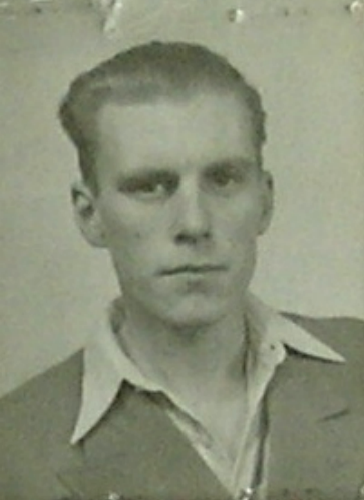
Wouter PLEYSIER.
HS9/1195/2
33.T.1
NAME: PLEYSIER, Wouter
P.T.C. 1-9-1944 (MI-5 & C only)
MI-5 advise 20-9-1944: Our only information about this man is contained in LRC file RPS 23.137
BORN: 7-4-1922 Groningen.
Occupation: Marine Cadet.
Nationality: Dutch
Relatives: Father - Wouter Edde, Dutch born Groningen, aged 47.
Mother - Catharina Jacoba van Haften, Dutch, born Vlaardingen 29-5-1897.
Brother - Gerard.
Brother - Edde Cornelis.
Sister - Agatha.
All at Groningen, 38a Heymanlaan.
Remarks: To be trained as WT operator commencing 19-9-1944
N/T 25-9-1944
Landed: Sept 1944
SD signed: 23-10-1944
OSA signed: 4-10-1944
History: Escaped from Holland. Now in Stockholm c/o Dutch Ministry of Marines.
N to MT 12-9-1944.
This man has been specially brought to this country from Sweden to be a WT operator for this section. He has been in the Dutch Merchant Navy and has been trained as a wireless operator. His present speed and capabilities as an operator is not known but we should like him to proceed straight to STS 52 where he should be brought up to the standard required, as quickly as possible, for them to work in the field.
D/CE.G.1 to N 15-9-1944.
Granting permission for him to enter training before clearance through the cards is given.
STS-HQ to STS-52 15-9-1944.
Will proceed to 52 for training commencing 16-9-1944.
Sgt. French STS-52 7-10-1944.
Arrived 19-9-1944. A very good type of Student, he is intelligent and very keen. His patriotism seems unquestionable although his father ia an active member of the NSB. His character is stable, he is truthful and always willing to help others. His habits are moderate, he does not drink much and women do not seemm to interest him. His Security is satisfactory and he observes it well.
12-9-1944 Arrived in U.K. from Stockholm.
STS-HQ - Cdt STS-51 19-10-1944.
Will arrive for training at STS-51 for the week commencing 22-10-1944.
Parachute Training Report STS-51 29-10-1944.
This party, as a whole showed good results, they were apt but did not exert themselves. They were keen to makethe descents but were rather indifferent at times and showed some lack of control. They completed three descents by day including one leg bag and a night descent from aircraft. FOUR DESCENTS SECOND CLASS.
Sgt. French STS-52 28-10-1944.
Arrived 19-10-1944. These Students are all of about the same category. They are of a very cheerful disposition, rather much on the rowy side, but always in the best of spirits. They do not, however come up to the high standard od the usual Student and their attitude is rather indifferent and to a certain extent casual in relation to their job. As a whole I do not believe that they are very reliable or that they could be trusted to a great extent. They would need strong and careful supervision in the field. They are all quite keen on drink and usually go out 'en masse' every evening and come home in rather high spirits. Their Security at first was poor, but after having impressed on the impotance and need for it and pointing out their mistakes continually, they have improved a considerable lot and have got quite interested in it.
Sgt. Ronnfeldt STS-52 3-11-1944.
This man comes from the northern part of Holland and is, as might be expected, quiet and shy with strangers. He is a moderate drinker and is inconspicuous when outside of the school. His Security is good and in this respect he is the best of the 33's at present at this school.
STS-32A 27-12-1944.
This Student is of average intelligence and is not very quick at learning new things. He is nevertheless practical and by sheer hard work acquired the main principles of security. He has good imagination and fair inititive. In character he is quiet and reserved, appears honest and straightforward and could always be relied upon to do his best. A pleasant personality, unassuming, he was popular with the other students. Has not the qualifications required for an organiser and with experience in the field might make a capable assistant.
CODES none taught.
17-3-1945 Left for the field.
4-4-1945 Arrived in U.K.
23-4-1945 Left for the field.
1-6-1945 Arrived in U.K.
DISPOSAL OF STUDENT 14-6-1945.
Rank 2/Lt
Rate of pay: Paid by Dutch.
Com. Training: 19-9-1944.
Schools Att: STS-50, STS-47, STS-51 STS-52 B group. reception Committees 40.
Operational: Infielf 17-3-1945, 4-4-1945.
Knowledge: Considerable 23-4-1945 - 1-6-1945
Sec. Students: None.
Reas. Disp: No further work available.
Rec. by Country Section: Return to unit.
14-6-1945 Sworn out by Junior Commander Bond.
RUMBLE
PLEYSIER, Wouter Dutch Section
Born: 7-4-1922 GRONINGEN.
Alias: KLAAS, VAN DER WAAL, Willem.
Sent: From U.K. 24-4-1945 (second mission).
Height 6' 2"; oval face; high forhead; blue eyes; normal noose and mouth; square chin; fair hair; scar on right thigh.
Army form W.3121
9 FEB 1946
Unit: Royal Netherlands Army
Rank and Army or Personal No. 2/Lieut. (4479)
Name: Wouter PLEYSIER.
2/Lieut. Pleysier was parachuted into the OVERIJSSEL area of enemy occipied HOLLAND on 17th March 1945, with order to proceed to the ACHTERHOEK region to establish WT communication between the organised resistance there and HQ in the U.K. PLEYSIER was successful in this task. He was overrun by advancing Allied troops om 31st March 1945.
PLEYSIER returned to the U.K. and on 23rd April 1945 he was parachuted into North Western HOLLAND to establish WT communication between the organised resistance in that area and HQ in U.K. He succeeded in carrying out his mission.
In regognition of the determination and courage displayed by this officer, it is recommended that he be awarded a Certificate of Commendation.
(Signed) C. Mc. V. Gubbins
Major General 12th Jan 1946
Copy for MI-6 Recived in V.B. 17 Section
Date 18-9-1944
From MI-5
Action taken No MI-6 report RVPS 15-9-1944
No. 23.139
PLEYSIER, Wouter.
Nationality: Dutch.
Born: 7-4-1922 Groningen.
Occupation: Apprentice Mate.
Religion: Dutch reformed Church.
Politics: None.
Languages: Dutch, German, English and knowledge French and Swedish.
Father: Wouter, aged 45, Dutch by birth, member of NSB, official of Waterstaat, heymanslaan 38A, Groningen, Holland.
Morther: Katharina nee VAN HAFTEN, aged 44, Dutch by birth, living with husband.
Broters (2): Gerard, aged 20, redacted, where abouts unknown.
Eddy, aged 15, living with parents.
Sister: Agatha, aged 18, employed in gown shop, living with parents.
Last permanent address: c/o Grandfather, Wieuwelaan 43, Vlaardingen.
Documents
1) Dutch passport No. A31439, issued 30-11-1943 by Dutch Legation, Stockhom and containing British Visa No. 13015
issued 9-9-1944 by British P.C.O. Stockholm "Athorised by HQ P. 20259."
2) Labour Exchange card No. 615/3369 issued 10-12-1943 at Stockholm.
Date & Port of embarkation: 11-9-1944 Stockholm.
Date & Port of arrival: 11-9-1944 Leuchars ex aircraft G. AGGI.
Date of arrival at RVPS: 12-9-1944
HISTORY.
PLEYSIER attended elementary School and MULO school at Groningen, leaving in September 1940. He then became a student at Groningen Mautical School where he remained until Septerber 1942. he states that amongst his fellow students where FOLMER (RPS 19.677) and KIVIET (RPS 19.414).
After leaving the nautical School he followed a shore course with the Rotterdam Lloyd. FOLMER and KIVIET also attended this course at the same time. During the latter course he lived at his grandfather's house at Vlaardingen.
He completed his course on 6-8-1943 and the Rotterdam Lloyd then arranged for him to sign on with the Dutch coaster, "ERNST", Captain FOEKENS, owner WIEGERS. he had already obtained his seamansbook from the Inspection of Shipping at The Hague, when he first began to attend the Rotterdam Lloyd course.
The first trip which he made with this vessel was to Hernosund via the Kiel Canal with a cargo of calcium and returned with timber to Delfzijl. The second trip on this vessel was to Goteburg with a cargo of bulbs and returned with timber. On this trip the captain was a Dutchman, VAN DER MOLEN, about the 23 or 24-10-1943 the "ERNST" was requisitioned by the Germans so he transferred to the "CAPRICORNUS, Captain DEES which was lying alongside the "ERNST" at Delfzijl. This ship was due to go to Sweden.
PLEYSIER has never been in contact with any secret organisations and has not carried out any clandestine activities.
PLEYSIER's Father.
Before the war PLEYSIER's father was employed by the Provinciale Waterstaat. Shortly after the invasion of Holland he became a member of the NSB. PLEYSIER thinks it was because he was talked into doing this by business colleagues. before the war PLEYSIER's father had had nothing to do with politics and PLEYSIER believes that he merely joined the nSB hoping that this would lead to promotion. PLEYSIER himself was very much against his father's action but did not discuss the matter with him and spent his last year in Holland away from home. The only occasion on which PLEYSIER's father discussed the matter of politics with PLEYSIER was when he asked him if he would care to join the SS which PLEYSIER immediately refused to do.
Next piece is redacted.
ESCAPE TO SWEDEN.
Having signed on with the "CAPRICORNUS" at the end of 1943 PLEYSIER sailed with this ship to Brunsbuttel where he was laid up for about three weeks and then continued to Kiel where the ship came under German flag. The captain and crew remained the same but the change of flag took place in order to avoid the ship being confiscated in Sweden.
PLEYSIER then decided to escape as he did not wish to sail under German flag. The ship sailed to Stockholm where he deseted the ship with a fellow seaman KUYCK (now employed at the Dutch Consulate, Stockholm). They left the ship after darkon the night of 29-11-1943. the climbed through a hole in the fence and having made enquiries from a taxi driver, founs their way to the Dutch Consulate. They were then placed in a pensionand next day interviewed by DE JONG. PLEYSIER's position was then legalised with the police and having remained in Stockholm until Christmas time he went to Upsala where he worked in the forests until mid-February 1944.
he was then sent to Goteburg to attend the wireless course and was later approached by the Dutch Consulate and asked if he would be willing to proceed to the U.K. for training for special duties. PLEYSIER agreed to do this and therefore on 11-9-1944 he embarked on aircraft G. AGGI, arriving Leuchars 11-9-1944 and was later sent to the RVPS 12-9-1944.
SPECIAL POINTS.
It is confirmed in the reports on FOLMER and KIVIET that they attended the course at the Groningen Nautical School and also at the Rotterdam Lloyd.
CONCLUSION.
PLEYSIER appeared to be perfectly sincere during the interrogation. he was quite frank about his father being a member of the NSB and appears genuine in his disapproval of this action but of course was unable to do anything about it. This, however, did lead him to spend the last year in Holland away from home. PLEYSIER had intended to first of all complete his sailing time before deserting but when the ship came under German flag he altered his mind and decided to desert forthwith.
He has now come to this country to be trained for special duties. He appears to be quiet and sensible type of lad and I do not think he is likely to be a danger from security point of view.
RECOMMENDATION.
Release to the Dutch authorities.
P.R. Steel (Capt)
REPORT ON OPERATION "RUMBLE" I.
Field Name: KLAAS.
Real Name: Wouter PLEYSIER.
Name on Identity card: W. v.d. WAAL.
Mission: Establish wireless contact between ENGLAND and NBS ACHTERHOEK, working together with organiser GEHRELS.
Dropping: We were dropped on the night of 17/18th March 1945, on field EVERT in OVERIJSSEL. No moon. Drop prefect. 24 containers, 4 packages and 2 men - all within 1000 yards.
After drop: Were contacted by the leader of reception centre JAN and taken to underground hole close to dropping ground. Helped afterwards with clearing dropping ground of containers, chutes and packages. Reception committee consisted of ten men. Stayed with reception committee the whole day and met commander of district SALLAND called HERMAN (Doppen).
next day went on bicycle to HEETEN where we spent the night and met MAURITS (Beekman), wireless operator for SALLAND. Stayed in HEETEN ext day where our equipment arrived. On the day after we went to GROENLO where we stayed. recived wireless set by female courier the following day and got an accumulator. Worked set next day on common wireless antenna which was still on the roof of the house. Had beautiful contacts for the next four days, but was D/F'd on the fourth day. Stopped sending for the next two days and went to other safehouse about 10 km South, a farm. Set went wrong, could not get contact any more.
After second night on the farm, I cleared out with two of the KP to an underground hole, as German soldiers were to come to the farm.
The following morning I awoke liberated by a column of the 2nd British Army. We were contacted two days afterwards by Captain HARRAT of S.F. in GROENLO and taken to 1st Canadian Army Headquarters, from where we were transported back to ENGLAND.
RAPPORT: OPERATION - RUMBLE II.
MISSION: Keeping up wireless contact between office in London and NBS (Netherlands Interior Forces) of GEWEST XI
(part of Holland above North Sea Canal).
FIELD NAME: KLAAS!
DROPPING: Dropped in the night of 23rd-24th of April on one of the grounds of District III (in Gewest XI) near the small
village of Spanbroek, together with Operation GURGLE - field name DIRK (instructor). Further, the plane
flew 24 containers and 3 packages. The whole lot was dropped and landed nicely except for the packages
of which contents were broken: 4 MRC's (minature Communication Receivers), 2 Torches, 2 accumulators,
all of our equipment. Between plane and ground was a good S-Phone contact. The reception committee
was well organised and consisted of about 20 men. Doctor was present.
AFTER DROP: We stayed in safe house until after curfew and cycled afterwards to HQ of Commander Dropping Grounds
of District III (C.A.T.) {Hil Schipper, network}, where we had telephone contact with the organiser in Amsterdam
(Arend) {Henk Veeneklaas}. I got orders to go to Zaandam where I should make contact with London and
then lie low until communications between Amsterdam and London or between Amsterdam and Gewest
XI should be cut off. Then I should take up contact with London for Amsterdam in the first case or
otherwise keep up the contact between London and the Commanders NBS Gewest XI (HQ Zaandam),
who already had contact with London through Amsterdam.
IN FIELD:
Arrived in Zaandam 26th of April and had conversation with Commanders NBS Geweest XI. Got sleeping address and some sending addresses to choose from, also a group of 10 men with a commander as guards and help. Wireless equipment was sent afterwards from the North; there was a delay owing to transport difficulties. I got the equipment on the 2nd of May.
I tried to make contact on 3rd of May but I could not get it on the main schedule. I made contact on the 4th over the emergency and sent message "All OK, give orders" as capitulation was signed on that day. Germans were still active on that day, but as soon as the official capitulation came through by radio, all flags were run out and everybody got into a wild and festival mood. Resistance got above ground, but they were kept non-active as the Germans still showed some activity.
I kept contact with London and gave some personal messages until plan was cancelled. I could not get contact a single time on the principal skeds and so had to use the emergency every time.
Broadcast came through clearly - I got answer on the first message containing order "Report to representative Special Forces Detachment".
After liberation, I was introduced to the wireless operators who had been working on Einhoven with a self-made set since September 1944 every day.
The whole organisation of the NBS in Gewest XI made a very good impression on the population, who saw the fine discipline, good armament and other equipment (motor=cycles, cars, etc)
Most of the fighting part of the nBS were military men before the war. Uniform of the fighting part was - blue overalls with leather belt, green Dutch helmet, band marked "ORANJE" round left upper arm.
A parade was given by the NBS to welcome the old Town Mayor whose functions had been taken over by a Quisling during the occupation.
Owing to a well-organised plan, Quislings were taken to prison in good order and without much trouble (Schools were installed for this purpose). Girls who had "Collaborated"with the Germans got a haircut (a good one) on the first day of the liberation. This was prohibited afterwards by the Resistance Movement as the wrong people were doing it.
The first Canadians were heartily welcomed as everywhere.
I did not see DIRK again as he remained in the northern part of Gewest XI.
Contacted Special Forces on 16th of May.
(from MS. 22nd of May 1945)
NAME: PLEYSIER, Wouter
P.T.C. 1-9-1944 (MI-5 & C only)
MI-5 advise 20-9-1944: Our only information about this man is contained in LRC file RPS 23.137
BORN: 7-4-1922 Groningen.
Occupation: Marine Cadet.
Nationality: Dutch
Relatives: Father - Wouter Edde, Dutch born Groningen, aged 47.
Mother - Catharina Jacoba van Haften, Dutch, born Vlaardingen 29-5-1897.
Brother - Gerard.
Brother - Edde Cornelis.
Sister - Agatha.
All at Groningen, 38a Heymanlaan.
Remarks: To be trained as WT operator commencing 19-9-1944
N/T 25-9-1944
Landed: Sept 1944
SD signed: 23-10-1944
OSA signed: 4-10-1944
History: Escaped from Holland. Now in Stockholm c/o Dutch Ministry of Marines.
N to MT 12-9-1944.
This man has been specially brought to this country from Sweden to be a WT operator for this section. He has been in the Dutch Merchant Navy and has been trained as a wireless operator. His present speed and capabilities as an operator is not known but we should like him to proceed straight to STS 52 where he should be brought up to the standard required, as quickly as possible, for them to work in the field.
D/CE.G.1 to N 15-9-1944.
Granting permission for him to enter training before clearance through the cards is given.
STS-HQ to STS-52 15-9-1944.
Will proceed to 52 for training commencing 16-9-1944.
Sgt. French STS-52 7-10-1944.
Arrived 19-9-1944. A very good type of Student, he is intelligent and very keen. His patriotism seems unquestionable although his father ia an active member of the NSB. His character is stable, he is truthful and always willing to help others. His habits are moderate, he does not drink much and women do not seemm to interest him. His Security is satisfactory and he observes it well.
12-9-1944 Arrived in U.K. from Stockholm.
STS-HQ - Cdt STS-51 19-10-1944.
Will arrive for training at STS-51 for the week commencing 22-10-1944.
Parachute Training Report STS-51 29-10-1944.
This party, as a whole showed good results, they were apt but did not exert themselves. They were keen to makethe descents but were rather indifferent at times and showed some lack of control. They completed three descents by day including one leg bag and a night descent from aircraft. FOUR DESCENTS SECOND CLASS.
Sgt. French STS-52 28-10-1944.
Arrived 19-10-1944. These Students are all of about the same category. They are of a very cheerful disposition, rather much on the rowy side, but always in the best of spirits. They do not, however come up to the high standard od the usual Student and their attitude is rather indifferent and to a certain extent casual in relation to their job. As a whole I do not believe that they are very reliable or that they could be trusted to a great extent. They would need strong and careful supervision in the field. They are all quite keen on drink and usually go out 'en masse' every evening and come home in rather high spirits. Their Security at first was poor, but after having impressed on the impotance and need for it and pointing out their mistakes continually, they have improved a considerable lot and have got quite interested in it.
Sgt. Ronnfeldt STS-52 3-11-1944.
This man comes from the northern part of Holland and is, as might be expected, quiet and shy with strangers. He is a moderate drinker and is inconspicuous when outside of the school. His Security is good and in this respect he is the best of the 33's at present at this school.
STS-32A 27-12-1944.
This Student is of average intelligence and is not very quick at learning new things. He is nevertheless practical and by sheer hard work acquired the main principles of security. He has good imagination and fair inititive. In character he is quiet and reserved, appears honest and straightforward and could always be relied upon to do his best. A pleasant personality, unassuming, he was popular with the other students. Has not the qualifications required for an organiser and with experience in the field might make a capable assistant.
CODES none taught.
17-3-1945 Left for the field.
4-4-1945 Arrived in U.K.
23-4-1945 Left for the field.
1-6-1945 Arrived in U.K.
DISPOSAL OF STUDENT 14-6-1945.
Rank 2/Lt
Rate of pay: Paid by Dutch.
Com. Training: 19-9-1944.
Schools Att: STS-50, STS-47, STS-51 STS-52 B group. reception Committees 40.
Operational: Infielf 17-3-1945, 4-4-1945.
Knowledge: Considerable 23-4-1945 - 1-6-1945
Sec. Students: None.
Reas. Disp: No further work available.
Rec. by Country Section: Return to unit.
14-6-1945 Sworn out by Junior Commander Bond.
RUMBLE
PLEYSIER, Wouter Dutch Section
Born: 7-4-1922 GRONINGEN.
Alias: KLAAS, VAN DER WAAL, Willem.
Sent: From U.K. 24-4-1945 (second mission).
Height 6' 2"; oval face; high forhead; blue eyes; normal noose and mouth; square chin; fair hair; scar on right thigh.
Army form W.3121
9 FEB 1946
Unit: Royal Netherlands Army
Rank and Army or Personal No. 2/Lieut. (4479)
Name: Wouter PLEYSIER.
2/Lieut. Pleysier was parachuted into the OVERIJSSEL area of enemy occipied HOLLAND on 17th March 1945, with order to proceed to the ACHTERHOEK region to establish WT communication between the organised resistance there and HQ in the U.K. PLEYSIER was successful in this task. He was overrun by advancing Allied troops om 31st March 1945.
PLEYSIER returned to the U.K. and on 23rd April 1945 he was parachuted into North Western HOLLAND to establish WT communication between the organised resistance in that area and HQ in U.K. He succeeded in carrying out his mission.
In regognition of the determination and courage displayed by this officer, it is recommended that he be awarded a Certificate of Commendation.
(Signed) C. Mc. V. Gubbins
Major General 12th Jan 1946
Copy for MI-6 Recived in V.B. 17 Section
Date 18-9-1944
From MI-5
Action taken No MI-6 report RVPS 15-9-1944
No. 23.139
PLEYSIER, Wouter.
Nationality: Dutch.
Born: 7-4-1922 Groningen.
Occupation: Apprentice Mate.
Religion: Dutch reformed Church.
Politics: None.
Languages: Dutch, German, English and knowledge French and Swedish.
Father: Wouter, aged 45, Dutch by birth, member of NSB, official of Waterstaat, heymanslaan 38A, Groningen, Holland.
Morther: Katharina nee VAN HAFTEN, aged 44, Dutch by birth, living with husband.
Broters (2): Gerard, aged 20, redacted, where abouts unknown.
Eddy, aged 15, living with parents.
Sister: Agatha, aged 18, employed in gown shop, living with parents.
Last permanent address: c/o Grandfather, Wieuwelaan 43, Vlaardingen.
Documents
1) Dutch passport No. A31439, issued 30-11-1943 by Dutch Legation, Stockhom and containing British Visa No. 13015
issued 9-9-1944 by British P.C.O. Stockholm "Athorised by HQ P. 20259."
2) Labour Exchange card No. 615/3369 issued 10-12-1943 at Stockholm.
Date & Port of embarkation: 11-9-1944 Stockholm.
Date & Port of arrival: 11-9-1944 Leuchars ex aircraft G. AGGI.
Date of arrival at RVPS: 12-9-1944
HISTORY.
PLEYSIER attended elementary School and MULO school at Groningen, leaving in September 1940. He then became a student at Groningen Mautical School where he remained until Septerber 1942. he states that amongst his fellow students where FOLMER (RPS 19.677) and KIVIET (RPS 19.414).
After leaving the nautical School he followed a shore course with the Rotterdam Lloyd. FOLMER and KIVIET also attended this course at the same time. During the latter course he lived at his grandfather's house at Vlaardingen.
He completed his course on 6-8-1943 and the Rotterdam Lloyd then arranged for him to sign on with the Dutch coaster, "ERNST", Captain FOEKENS, owner WIEGERS. he had already obtained his seamansbook from the Inspection of Shipping at The Hague, when he first began to attend the Rotterdam Lloyd course.
The first trip which he made with this vessel was to Hernosund via the Kiel Canal with a cargo of calcium and returned with timber to Delfzijl. The second trip on this vessel was to Goteburg with a cargo of bulbs and returned with timber. On this trip the captain was a Dutchman, VAN DER MOLEN, about the 23 or 24-10-1943 the "ERNST" was requisitioned by the Germans so he transferred to the "CAPRICORNUS, Captain DEES which was lying alongside the "ERNST" at Delfzijl. This ship was due to go to Sweden.
PLEYSIER has never been in contact with any secret organisations and has not carried out any clandestine activities.
PLEYSIER's Father.
Before the war PLEYSIER's father was employed by the Provinciale Waterstaat. Shortly after the invasion of Holland he became a member of the NSB. PLEYSIER thinks it was because he was talked into doing this by business colleagues. before the war PLEYSIER's father had had nothing to do with politics and PLEYSIER believes that he merely joined the nSB hoping that this would lead to promotion. PLEYSIER himself was very much against his father's action but did not discuss the matter with him and spent his last year in Holland away from home. The only occasion on which PLEYSIER's father discussed the matter of politics with PLEYSIER was when he asked him if he would care to join the SS which PLEYSIER immediately refused to do.
Next piece is redacted.
ESCAPE TO SWEDEN.
Having signed on with the "CAPRICORNUS" at the end of 1943 PLEYSIER sailed with this ship to Brunsbuttel where he was laid up for about three weeks and then continued to Kiel where the ship came under German flag. The captain and crew remained the same but the change of flag took place in order to avoid the ship being confiscated in Sweden.
PLEYSIER then decided to escape as he did not wish to sail under German flag. The ship sailed to Stockholm where he deseted the ship with a fellow seaman KUYCK (now employed at the Dutch Consulate, Stockholm). They left the ship after darkon the night of 29-11-1943. the climbed through a hole in the fence and having made enquiries from a taxi driver, founs their way to the Dutch Consulate. They were then placed in a pensionand next day interviewed by DE JONG. PLEYSIER's position was then legalised with the police and having remained in Stockholm until Christmas time he went to Upsala where he worked in the forests until mid-February 1944.
he was then sent to Goteburg to attend the wireless course and was later approached by the Dutch Consulate and asked if he would be willing to proceed to the U.K. for training for special duties. PLEYSIER agreed to do this and therefore on 11-9-1944 he embarked on aircraft G. AGGI, arriving Leuchars 11-9-1944 and was later sent to the RVPS 12-9-1944.
SPECIAL POINTS.
It is confirmed in the reports on FOLMER and KIVIET that they attended the course at the Groningen Nautical School and also at the Rotterdam Lloyd.
CONCLUSION.
PLEYSIER appeared to be perfectly sincere during the interrogation. he was quite frank about his father being a member of the NSB and appears genuine in his disapproval of this action but of course was unable to do anything about it. This, however, did lead him to spend the last year in Holland away from home. PLEYSIER had intended to first of all complete his sailing time before deserting but when the ship came under German flag he altered his mind and decided to desert forthwith.
He has now come to this country to be trained for special duties. He appears to be quiet and sensible type of lad and I do not think he is likely to be a danger from security point of view.
RECOMMENDATION.
Release to the Dutch authorities.
P.R. Steel (Capt)
REPORT ON OPERATION "RUMBLE" I.
Field Name: KLAAS.
Real Name: Wouter PLEYSIER.
Name on Identity card: W. v.d. WAAL.
Mission: Establish wireless contact between ENGLAND and NBS ACHTERHOEK, working together with organiser GEHRELS.
Dropping: We were dropped on the night of 17/18th March 1945, on field EVERT in OVERIJSSEL. No moon. Drop prefect. 24 containers, 4 packages and 2 men - all within 1000 yards.
After drop: Were contacted by the leader of reception centre JAN and taken to underground hole close to dropping ground. Helped afterwards with clearing dropping ground of containers, chutes and packages. Reception committee consisted of ten men. Stayed with reception committee the whole day and met commander of district SALLAND called HERMAN (Doppen).
next day went on bicycle to HEETEN where we spent the night and met MAURITS (Beekman), wireless operator for SALLAND. Stayed in HEETEN ext day where our equipment arrived. On the day after we went to GROENLO where we stayed. recived wireless set by female courier the following day and got an accumulator. Worked set next day on common wireless antenna which was still on the roof of the house. Had beautiful contacts for the next four days, but was D/F'd on the fourth day. Stopped sending for the next two days and went to other safehouse about 10 km South, a farm. Set went wrong, could not get contact any more.
After second night on the farm, I cleared out with two of the KP to an underground hole, as German soldiers were to come to the farm.
The following morning I awoke liberated by a column of the 2nd British Army. We were contacted two days afterwards by Captain HARRAT of S.F. in GROENLO and taken to 1st Canadian Army Headquarters, from where we were transported back to ENGLAND.
RAPPORT: OPERATION - RUMBLE II.
MISSION: Keeping up wireless contact between office in London and NBS (Netherlands Interior Forces) of GEWEST XI
(part of Holland above North Sea Canal).
FIELD NAME: KLAAS!
DROPPING: Dropped in the night of 23rd-24th of April on one of the grounds of District III (in Gewest XI) near the small
village of Spanbroek, together with Operation GURGLE - field name DIRK (instructor). Further, the plane
flew 24 containers and 3 packages. The whole lot was dropped and landed nicely except for the packages
of which contents were broken: 4 MRC's (minature Communication Receivers), 2 Torches, 2 accumulators,
all of our equipment. Between plane and ground was a good S-Phone contact. The reception committee
was well organised and consisted of about 20 men. Doctor was present.
AFTER DROP: We stayed in safe house until after curfew and cycled afterwards to HQ of Commander Dropping Grounds
of District III (C.A.T.) {Hil Schipper, network}, where we had telephone contact with the organiser in Amsterdam
(Arend) {Henk Veeneklaas}. I got orders to go to Zaandam where I should make contact with London and
then lie low until communications between Amsterdam and London or between Amsterdam and Gewest
XI should be cut off. Then I should take up contact with London for Amsterdam in the first case or
otherwise keep up the contact between London and the Commanders NBS Gewest XI (HQ Zaandam),
who already had contact with London through Amsterdam.
IN FIELD:
Arrived in Zaandam 26th of April and had conversation with Commanders NBS Geweest XI. Got sleeping address and some sending addresses to choose from, also a group of 10 men with a commander as guards and help. Wireless equipment was sent afterwards from the North; there was a delay owing to transport difficulties. I got the equipment on the 2nd of May.
I tried to make contact on 3rd of May but I could not get it on the main schedule. I made contact on the 4th over the emergency and sent message "All OK, give orders" as capitulation was signed on that day. Germans were still active on that day, but as soon as the official capitulation came through by radio, all flags were run out and everybody got into a wild and festival mood. Resistance got above ground, but they were kept non-active as the Germans still showed some activity.
I kept contact with London and gave some personal messages until plan was cancelled. I could not get contact a single time on the principal skeds and so had to use the emergency every time.
Broadcast came through clearly - I got answer on the first message containing order "Report to representative Special Forces Detachment".
After liberation, I was introduced to the wireless operators who had been working on Einhoven with a self-made set since September 1944 every day.
The whole organisation of the NBS in Gewest XI made a very good impression on the population, who saw the fine discipline, good armament and other equipment (motor=cycles, cars, etc)
Most of the fighting part of the nBS were military men before the war. Uniform of the fighting part was - blue overalls with leather belt, green Dutch helmet, band marked "ORANJE" round left upper arm.
A parade was given by the NBS to welcome the old Town Mayor whose functions had been taken over by a Quisling during the occupation.
Owing to a well-organised plan, Quislings were taken to prison in good order and without much trouble (Schools were installed for this purpose). Girls who had "Collaborated"with the Germans got a haircut (a good one) on the first day of the liberation. This was prohibited afterwards by the Resistance Movement as the wrong people were doing it.
The first Canadians were heartily welcomed as everywhere.
I did not see DIRK again as he remained in the northern part of Gewest XI.
Contacted Special Forces on 16th of May.
(from MS. 22nd of May 1945)
To: D/CE N/OR/1514
From: N 19 Jul 1945
Two of our ex-agents Pleysier and Stuvel have asked us to give them some form of certificate to assist them in their future cateers; I attach herewith suggested version duly signed.
I shall be glad if you will approve and kindly return to me urgently, as both these boys would like to have these certificates by the morning of the 20th.
19th July, 1945
TO WHOM IT MAY CONCERN
Lt. W. PLEYSIER, of the Netherlands Armed Forces volunteered for special work under the supervision of this department and, in conjunction with the Dutch Ministry of War, he performed outstanding acts of bravery in the liberation of his country and carried out his duties to the entire satisfaction of all concerned.
Lt. Colonel
4
Radio
P. Luisterde naar de uitzendingen vanuit Engeland te Groningen met een eigengebouwd toestel.
Er werd altijd geluisterd als zijn vader weg was.
P. en zijn zus luisterden naar de uitzendingen.
Doordat P. zelf haast nooit thuis was kon hij niet geregeld luisteren.
De lange golf werd haast niet gestoord. De korte golf kon P. niet krijgen.
P. luisterde naar de nieuws berichten in het Nederlands en het Engelsch.
P. vindt dat de nieuwsberichten zuiver worden door gegeven.
Naar Hilversum heeft P. niet geluisterd. Als hij luisterde dan was het naar Zweedsche zenders of Engelsche zenders.
Op de cursus van de Lloyd heeft P. een strooibiljet van de Engelschen gelezen, waarin vermeld stond dat Hitler volgens eigen opgaven practisch de heele geallieerde koopvaardij tot zinken had gebracht, maar dat de Engelschen toch nog genoeg schepen hadden om een aanval op Afrika te doen.
ref. W. Pleysier Rapport Vr. Ne. 379
nd
5
Economische gegevens.
Alle voedingsmiddelen die op bonnen werden aangegeven zijn wel altijd te krijgen, maar soms moet men er lang wachten.
In de zwarte handel is nog alles te koop maar prijzen kan P. niet opgeven.
Volgens P. zijn de prijzenvermoedelijk te hoog zoodat niet iedereen in de zwarte handel kan koopen.
Volgens P. kan zijn vader moeilijk in de zwarte handel koopen omdat hij NSB-er was. P. weet ook niet of de NSB een eigen organisatie heeft voor extra voeding.
Arbeiders die zwaar werk verrichten krijgen een toeslag op de bonnen.
Voor zwaar werk 50% en voor zeer zwaar werk 100% toelage.
Op fabrieken en kantoren wordt extra voeding uit de gaarkeukens verstrekt
De porties waren ¾ liter en kosten 10 cent.
Sommige schoolen krijgen ook extra eten van de gaarkeukens maar dan moeten de leerlingen zelf de volle prijs betalen.
De kwaliteit van het eten uit de gaarkeukens is slecht.
Kleeding.
Kleeding en schoenen zijn in Nederland niet meer te koop.
Wol is er helemaal niet meer.
Alles moet worden gekocht op speciale vergunningen.
materiaal voor het verstellen van kleeding en schoenen is niet meer te koop.
Dekking.
Dekens en lakens zijn haast niet meer te krijgen. Als men nieuwe dekens noodig heeft, komt er eerst iemand van het distributie kantoor controleeren of dit werkelijk noodig is.
Verwarming.
Te Vlaardingen was het rantsoen gas niet voldoiende om warme maaltijden op te brereiden. Van Groningen weet P. niets af. Ook niet of zijn vader nog extra toewijzingen kreeg omdat hij NSB-er was.
In vlaardingen was het rantsoenbrandstof niet voldoende om een vertrek gedurende de geheele winter te verwarmen.
Hygiene.
In Vlaardingen konden de kleeren éénmaal in de 2 weken gewasschen worden.
Er werd dan wel gebruik gemaakt van surrogaat waschmiddelen.
Babies krijgen nog goede toiletzeep. Hoeveel kan P. niet opgeven.
Aan boord was het zeep rantsoen net voldoende voor dagelijk gebruik en de wasch.
Aan land was het zeep rantsoen te kort voor lichaamelijk gebruik.
De zeep is luchtzeep en is na 2 maal gebruikt te zijn op.
Beda is niet meer te koop.
Ref. W. Pleysier. Rapport Vr,Ne. 379
nd
9
Militaire gegevens.
P. is niet in militaire dienst geweest omdat hij nog te jong was.
De bombardementen van de RAF op Nederland zijn noodzakelijk, omdat er een groot deel van de fabrieken voor de Duitsche Weermacht moet werken.
P. zou wel graag zien dat er beter gegooid zou worden. er worden nog te veel Nederlanders bij deze bombardementen gedood.
P. heeft éénmaal in Rotterdam gezien hoe de Nederlandsche krijgsgevangenen vervoerd werden. De datum kan hij zich niet herinneren. De menschen werden in beestenwagens vervoerd. De trein ging naar Dordrecht.
Het rantsoen smeerolie voor schepen is net voldoende voor de reizen. Er moet dan niets bijzonders gebeuren want anders haalt men het einde niet.
De eerste reis met de ERNST van Cuxhaven naar Delfzijl heeft men op zee smeerolie moeten leenen van de VERTROUWEN daar men anders niet in Delfzijl kon komen.
De laatste reis van P. op de CAPRICARNUS had men veel last van gasolie. Deze olie was erg vuil en de sproeiers waren geregeld verstopt.
De laatste reis kreeg men in Delfzijl 6800 lieter gasolie aan boord en 400 liter smeerolie. Dat was voor een reis van Delfzijl naar Stockholm, Sundsvall en dan terug naar Delfzijl.
In de Merwede haven te Rotterdam worden betonnen schepen gebouwd. Waarvoor deze schepen dienen weet P. niet.
Aan de Lloyd kade liggen geregeld voorposten booten en mijnenveegers.
In de Jodhaven liggen voorposten booten, de kleinere modellen.
In de Parkhaven liggen verschillende soorten Marine vaartuigen.
In Delfzijl is er op het oogenblik een gebrek aan lichters. De laatste reis moest men drie weken wachten voordat het schip gelost kon worden.
In Groningen lossen de kustbooten helemaal niet meer omdat er geen werkkrachten zijn.
Aan de Groeneweg te Vlaardingen staat een batterij van 7 cm afweergeschut.
Vlak bij de Vulkaan haven te Vlaardingen Westzijde staat een batterij afweergeschut. Tusschen Schiebroek en Schiedam staan ook verscheidene batterijen.
Te Brunsbuttel heeft P. een kleine duikboot gezien, deze was ongeveer 30 m lang. De stuurman van de CAPROCODUS heeft men een lid van de bemanning van deze duikboot gesproken. En hij vertelde dat de bemanning uit 8 man bestaat en dat de snelheid van de duikboot 36 mijl bedroeg. Dit werd niet gelooft. De duikboot had een licht grijze kleur.
From: N 19 Jul 1945
Two of our ex-agents Pleysier and Stuvel have asked us to give them some form of certificate to assist them in their future cateers; I attach herewith suggested version duly signed.
I shall be glad if you will approve and kindly return to me urgently, as both these boys would like to have these certificates by the morning of the 20th.
19th July, 1945
TO WHOM IT MAY CONCERN
Lt. W. PLEYSIER, of the Netherlands Armed Forces volunteered for special work under the supervision of this department and, in conjunction with the Dutch Ministry of War, he performed outstanding acts of bravery in the liberation of his country and carried out his duties to the entire satisfaction of all concerned.
Lt. Colonel
4
Radio
P. Luisterde naar de uitzendingen vanuit Engeland te Groningen met een eigengebouwd toestel.
Er werd altijd geluisterd als zijn vader weg was.
P. en zijn zus luisterden naar de uitzendingen.
Doordat P. zelf haast nooit thuis was kon hij niet geregeld luisteren.
De lange golf werd haast niet gestoord. De korte golf kon P. niet krijgen.
P. luisterde naar de nieuws berichten in het Nederlands en het Engelsch.
P. vindt dat de nieuwsberichten zuiver worden door gegeven.
Naar Hilversum heeft P. niet geluisterd. Als hij luisterde dan was het naar Zweedsche zenders of Engelsche zenders.
Op de cursus van de Lloyd heeft P. een strooibiljet van de Engelschen gelezen, waarin vermeld stond dat Hitler volgens eigen opgaven practisch de heele geallieerde koopvaardij tot zinken had gebracht, maar dat de Engelschen toch nog genoeg schepen hadden om een aanval op Afrika te doen.
ref. W. Pleysier Rapport Vr. Ne. 379
nd
5
Economische gegevens.
Alle voedingsmiddelen die op bonnen werden aangegeven zijn wel altijd te krijgen, maar soms moet men er lang wachten.
In de zwarte handel is nog alles te koop maar prijzen kan P. niet opgeven.
Volgens P. zijn de prijzenvermoedelijk te hoog zoodat niet iedereen in de zwarte handel kan koopen.
Volgens P. kan zijn vader moeilijk in de zwarte handel koopen omdat hij NSB-er was. P. weet ook niet of de NSB een eigen organisatie heeft voor extra voeding.
Arbeiders die zwaar werk verrichten krijgen een toeslag op de bonnen.
Voor zwaar werk 50% en voor zeer zwaar werk 100% toelage.
Op fabrieken en kantoren wordt extra voeding uit de gaarkeukens verstrekt
De porties waren ¾ liter en kosten 10 cent.
Sommige schoolen krijgen ook extra eten van de gaarkeukens maar dan moeten de leerlingen zelf de volle prijs betalen.
De kwaliteit van het eten uit de gaarkeukens is slecht.
Kleeding.
Kleeding en schoenen zijn in Nederland niet meer te koop.
Wol is er helemaal niet meer.
Alles moet worden gekocht op speciale vergunningen.
materiaal voor het verstellen van kleeding en schoenen is niet meer te koop.
Dekking.
Dekens en lakens zijn haast niet meer te krijgen. Als men nieuwe dekens noodig heeft, komt er eerst iemand van het distributie kantoor controleeren of dit werkelijk noodig is.
Verwarming.
Te Vlaardingen was het rantsoen gas niet voldoiende om warme maaltijden op te brereiden. Van Groningen weet P. niets af. Ook niet of zijn vader nog extra toewijzingen kreeg omdat hij NSB-er was.
In vlaardingen was het rantsoenbrandstof niet voldoende om een vertrek gedurende de geheele winter te verwarmen.
Hygiene.
In Vlaardingen konden de kleeren éénmaal in de 2 weken gewasschen worden.
Er werd dan wel gebruik gemaakt van surrogaat waschmiddelen.
Babies krijgen nog goede toiletzeep. Hoeveel kan P. niet opgeven.
Aan boord was het zeep rantsoen net voldoende voor dagelijk gebruik en de wasch.
Aan land was het zeep rantsoen te kort voor lichaamelijk gebruik.
De zeep is luchtzeep en is na 2 maal gebruikt te zijn op.
Beda is niet meer te koop.
Ref. W. Pleysier. Rapport Vr,Ne. 379
nd
9
Militaire gegevens.
P. is niet in militaire dienst geweest omdat hij nog te jong was.
De bombardementen van de RAF op Nederland zijn noodzakelijk, omdat er een groot deel van de fabrieken voor de Duitsche Weermacht moet werken.
P. zou wel graag zien dat er beter gegooid zou worden. er worden nog te veel Nederlanders bij deze bombardementen gedood.
P. heeft éénmaal in Rotterdam gezien hoe de Nederlandsche krijgsgevangenen vervoerd werden. De datum kan hij zich niet herinneren. De menschen werden in beestenwagens vervoerd. De trein ging naar Dordrecht.
Het rantsoen smeerolie voor schepen is net voldoende voor de reizen. Er moet dan niets bijzonders gebeuren want anders haalt men het einde niet.
De eerste reis met de ERNST van Cuxhaven naar Delfzijl heeft men op zee smeerolie moeten leenen van de VERTROUWEN daar men anders niet in Delfzijl kon komen.
De laatste reis van P. op de CAPRICARNUS had men veel last van gasolie. Deze olie was erg vuil en de sproeiers waren geregeld verstopt.
De laatste reis kreeg men in Delfzijl 6800 lieter gasolie aan boord en 400 liter smeerolie. Dat was voor een reis van Delfzijl naar Stockholm, Sundsvall en dan terug naar Delfzijl.
In de Merwede haven te Rotterdam worden betonnen schepen gebouwd. Waarvoor deze schepen dienen weet P. niet.
Aan de Lloyd kade liggen geregeld voorposten booten en mijnenveegers.
In de Jodhaven liggen voorposten booten, de kleinere modellen.
In de Parkhaven liggen verschillende soorten Marine vaartuigen.
In Delfzijl is er op het oogenblik een gebrek aan lichters. De laatste reis moest men drie weken wachten voordat het schip gelost kon worden.
In Groningen lossen de kustbooten helemaal niet meer omdat er geen werkkrachten zijn.
Aan de Groeneweg te Vlaardingen staat een batterij van 7 cm afweergeschut.
Vlak bij de Vulkaan haven te Vlaardingen Westzijde staat een batterij afweergeschut. Tusschen Schiebroek en Schiedam staan ook verscheidene batterijen.
Te Brunsbuttel heeft P. een kleine duikboot gezien, deze was ongeveer 30 m lang. De stuurman van de CAPROCODUS heeft men een lid van de bemanning van deze duikboot gesproken. En hij vertelde dat de bemanning uit 8 man bestaat en dat de snelheid van de duikboot 36 mijl bedroeg. Dit werd niet gelooft. De duikboot had een licht grijze kleur.
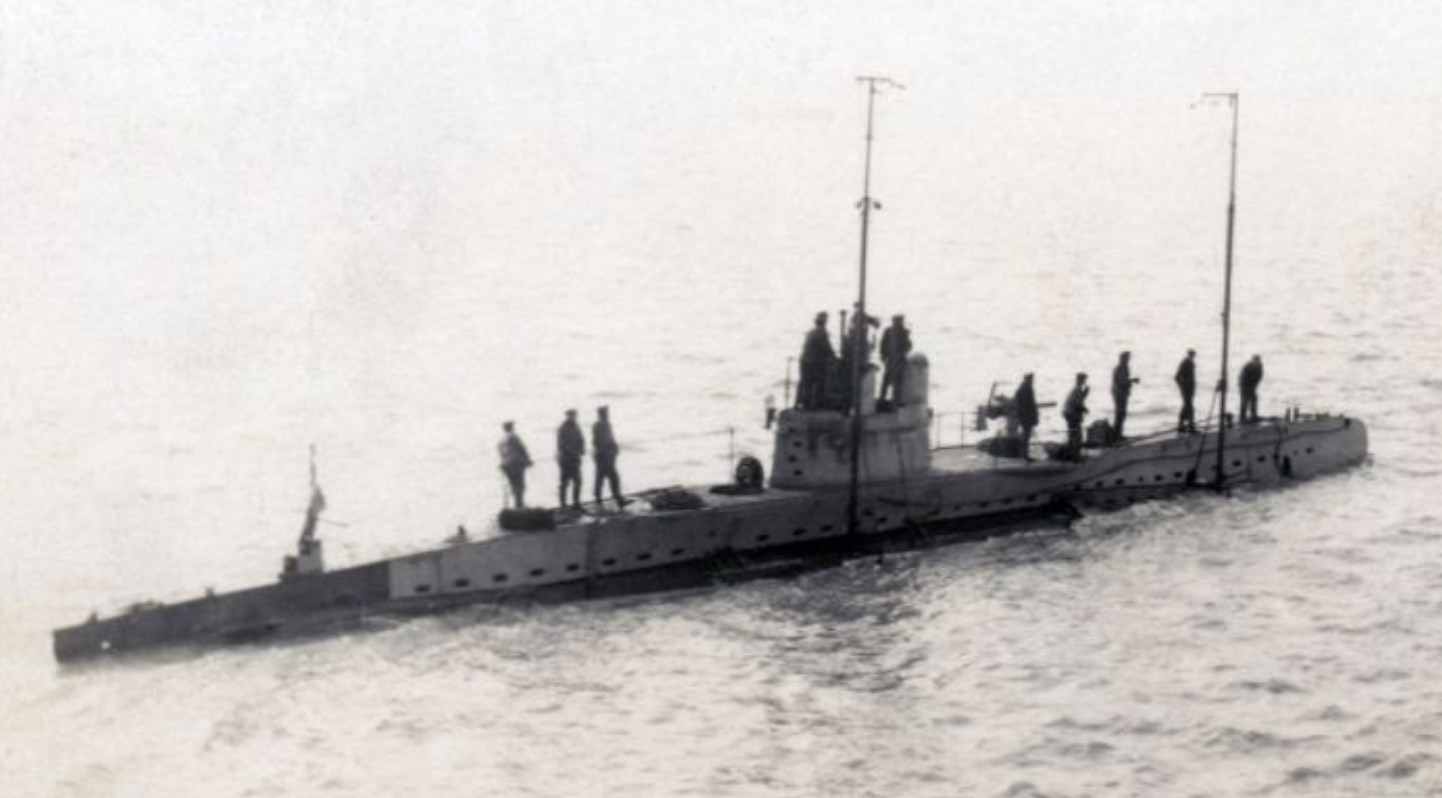
Waarschijnlijk gaat het hier om een UB-II uit WW-1.
Real Name: PLEYSIER Interrogated by: Capt. Whittaker
Code Name: KLAAS on: 11-6-1945
1ST MISSION: WT Operator to organiser GEHRELS in the area of ACHTERHOEK. In de field until 28-3-1945 when he
was liberated.
2ND MISSION: 3rd April till 1st May 1945, sent out as WT operator to the organiser of GEWEST 11 in the northern
part of HOLLAND.
A. FIRST MISSION
1. ARRIVAL
The agent landed by parachute 800 yards away from the selected pinpoit in the OVERIJSSEL area. accompanied by the organiser, 24 containers and 8 packages. There were 10 men in the reception committe who took them to a hole underground, after they had helped to collect the containers, where they satayed all night and all the following day.
There was no check of identity and no passwords exchanged. Towards the evening they were conducted to a village some 15 kms away, where they satayed in the safehouse for a few days.
The agent was then taken to another safehouse where his equipment had been established and he set to work to establish contact at once. He reported their safe arrival.
2. SITUATION IN AREA
There were no collaborators in the area and the whole population was very resistance-minded, the farmers especially being very helpful by supplying food and accomodation as required.
3. COVER
The LONDON papers committed the agent to a completely false story of having spent some time in GERMANY and being now a sailor who had just come from HAMBURG, suffering from lung trouble. These papers were never inspected and his identity was never checked.
4. ORGANISATION
He knows nothing of the organisation on the ground.
5. RECRUITS
Nil.
6. TRAINING
Nil.
7. PAY
Nil.
8. SECURITY RULES
Nil.
9. PREMISES.
The safe houses which the agent used for transmissions were all selected for him by the organiser. He lived in the same house as that which he used for transmission, and very rarely, if ever, went out doors. There no no Gestapo or SD in the area,
10. INTERNAL COMMUNICATIONS.
Carried out by couriers, who were almost invariable girls who carried messages usually in clear, sometimes in code, by bicycle.
11. EXTERNAL COMMUNICATIONS.
WT. The agent sent 3 or 4 messages to London. he was DF'd on the fourth day of his stay in the first safe house. He had no guards and in the middle of his transmission observed what could only have been a DF car coming slowly down the street, which he could see from his window. He at once packed up his et and concealed it, and went to another safe house almost immediately. From here he was unable to transmit because there were many Germans in this area.
If his organiser had had a regular series of messages he would no doubt have received them from him personally, since the organiser used the same safe house as he did himself. He had received no instructions about the disposal of messages.
12. ENEMY COUNTER INTELLIGENCE.
The local Police were very helpful and he himself and his set were taken to the second safe house in the escort of policemen. He experienced no controls or searches, but comments that if he had been searched a Bayswater's 'bus ticket' would have been found in his trouser pocket. The SD and the Gestapo were not active in the area and there were hardly any members of the NSB
No other information under remaining paragraph headings. Zie Mission GRUNT.
B. SECOND MISSION
Went out as WT operator to the commander of GEWEST 11, accompanied by a weapon instructor named BROEKMAN. he landed by parachute on the pin-point, was taken to a farm and found that the area was rather like a maquis. there were no Germans in the districtand he was told that he was quite safe. He was able to get in touch with his HQ by telephoning on the 'Blackline' and he was instructed to go to ZAANDAM. He was given two safe houses, one for accomodation, the other for transmissions. He waited for a week before his set arrived, and then had to wait again before his crystals arrived, but was able to announce his safe arrival the day before liberation.
ORDERS FOR: GEHRELS and PLEYSIER. Copt No. 2
1. INFORMATION.
In the OVERIJSSEL area are a considerable number of small KP (KNOKPLOEGEN), OD, and RVV (Raad van Verzet) groups. A considerable number of dropping operations have already taken place in the central and northern area of OVERIJSSEL, but little or nothing in the ACHTERHOEK. There is, at present, no direct wireless communication with the ACHTERHOEK, but resistance elements are reported to be there.
The Commander of the whole of the OVERIJSSEL area is EDUARD (Hotz), and the commandant ACHTERHOEK comes under EDUARD's control.
a) Operation Names: GEHRELS - GRUNT PLEYSIER - RUMBLE
These are your operational names by which you will be known at the station of your departure. You will never use these names in the field.
b) Code names in the field: GEHRELS - JOOP PLEYSIER - KLAAS.
These are the only names that you should use in messages and the names by which you will be known by other members of the organisation.
2. INTENTION.
When you have contacted the Brigade Commandant of the NBS for ACHTERHOEK and have satisfied him as to your bona fides you will explain that your mission is to act as liaison officers between him and the Allied Forces in conjunction with H.R.H. PRINCE BERNHARD, and to assist the use of arms and explosives and to organise the WT contact through your operator with the Allied Forces via Special Forces HQ.
You will instruct them on the correct reception committee procedure and after having submitted grounds to us, arrange for the briefing of the reception conventions which you will take with you.
You may report to us sabotage targets which can be attacked, but resistance will take no action until they are instructed by us through you to do so.
You will explain to the O.D. that all matters relating to resistance questions should be passed through your wireless channel and not via EINDHOVEN, which only deals with ordinary intelligence matters.
The Commandant of OVERIJSSEL should already have received special instructions from us to what action should be taken when the right time comes; for your information and in case the Commandant, ACHTERHOEK, has not already received them, these are:
a)
In order to give resistance maximum opportunity of helping the Allies to liberate HOLLAND and to avoid premature action, it has been decided to divide unliberated HOLLAND into ZONES, each zone to come into operation only when the Allied Commander thinks necessary. It is important that ZONES should not go into action until the special BBC message or wireless instructions are broadcast.
b)
Your area consist of the ACHTERHOEK.
You should plan now to put into operation in the future the following activities throughout the whole of your area:
1)
Combined railway and road sabotage, but no action to be taken which will take more than 8 days to repair.
2)
Sabotage of telecommunications, but records of sabotage effected to be kept and records and repeater stations to be saved.
3)
Harassing Attacks, including attacks on isolated headquarters and detachments.
4)
Passing of Itelligence. This means recruit now suitable men to be sent on receipt of action messages through the Allied Forces. Three men should be sent daily from your region and bring tactical information concerning concentrations of enemy troops particularly in villages, and if concentrations have wireless masts, locations of minefields and field works, areas completely free of enemy troops, signs and symbols on vehecles, reliefs and troop movements. In all cases, time, date and source of information should be given. Men should report to intelligence officers at brigades. In addition to this, plans should be made for other men with good local knowledge to remain hidden until they are over-run by the Allied Forces; they will them give local tactical intelligence and act as guides. Passwords for them will be given later.
5)
Prevention of demolitions. As enemy start to withdraw from a region, every effort should be made to protect buildings and material useful to Allies and Dutch authorities. If enemy are withdrawing, and no action message is received, then act on your own initiative.
6)
Protection of valuable technical personnel. Warn them to lie low and report to Allies when liberated. If the Commandant ACHTERHOEK has not received his action messages you must let us know. It is important that the text of action messages for your area should not be knowm or communicated to persons of other areas.
RECEPTION COMMITTEES.
A reception committee should be made up of people of whom you have or can obtain full knowledge and feel absolutely sure. It is imperative that you should bear in mind the security precautions and recruit personnel so that should one man be arrested, he will not be in a position to give information which might prejudice other people or the organisation. You should never attend a reception committee unless absolutely necessary.
Once this committee has been formed you will advise us when it is ready to start work, the quantities of containers with which it can safely deal at one time, and also send us for approval at least two dsuggested dropping points at which reception committees could receive stores on any single night - bearing in mind that if several grounds are accepted it might be found necessary to put all operations on together on one night at the various dropping points. The size of the committes will be at your own discretion and will depend upon the quantity of material which you wish to receive.
CO-ORDINATES.
Normally you will use maps of the Netherlands, scale 1:50.000. If, however, you are unable to procure these maps you may use the ANWB maps in the manner in which you have been trained, also giving the distance and bearings of the two nearest villages, towns or places. In any case, always give the serial number and scale of the map which you are using. See ANNEXE I.
You have been instructed in reception work and as to the type of grounds that are suitable. It is necessary to keep some distance away from anti-aircraft defences and also to avoid zones which are usually patrolled by German night fighters.
LIGHTING SYSTEM.
See ANNEXE II for instructions as to the lighting system you must use.
METHOD.
On the first favourable night beginning January 1945, you and KLAAS will be dropped to a reception committee, at a dropping point which can be indicated to you prior to your departure. You will ask the reception committee to look after you and your wireless equipment until thay can put you in touch with Commandant of the O.D. or K.P.
Residence.
You should ask the Commandant to arrange for you safe houses and houses from which KLAAS can transmit in safety.
ADMINISTRATION.
You and KLAAS will each have Hfl. 5.000 for your own use and you will also take with you Hfl. 10.000 for the Commandant ACHTERHOEK.
Equipment - camouflage.
a) Your peronal baggage will be in a brief case.
b) Money will be carried in money-belts on your persons.
c) Your codes will be suitable camouflaged, see Annexe IV.
d) Your wireless equipment will be packed in two packages, see Annexe V.
Cover Story. See Annexe VI.
Clothing. You will have received these in accordance with your requirements.
Equipment. You have been interviewed as to your requirements for the field and will receive these, plus your
parachute equipment, at the station of departure. See Annexe VII.
Documents. You have been issued with documents to fit your cover story.
COMMUNICATIONS.
a) Wireless.
You will take a one-time-pad for your own use, and KLAAS will have his own code and equipment for the maintenance of two-way contact with London. You will do all the encoding of your messages to us and the decoding of our messages to you; this must be strictly adhered to for the security of all concerned. KLAAS will only send mesaages to us concerning technical matters relating to contacts and/or the acknowledgement of messages which we shall broadcast by WT. See Annexe VIII.
b) Messages by WT.
In order to maintain the security of the WT operator, it is essential that messages should be kept as short as possible and limited to important information connected with the mission. Records of messages exchanged should not be kept.
c) Security.
If we have reason to suppose that you have been arrested and that the Germans are working the transmitter, we shall ask you an "innocent" question. If you are safe, you will give us the coorect answer, but if we do not receive the correct answer we shall presume that you are in enemy hands. See Annexe IX.
FINANCAL ARRANGEMENTS.
Your salary will be credited to your account with the Duch Government.
In addition to the targets which resistance are already attacking, destruction of the following targets NOW will assist Allied War effort:
a) Oxygen Plants used in connection with Rockets.
b) Petrol and Oil supplies.
c) Factories known to be working for the Germans particularly those engaged in making aircraft and submarine parts,
instruments, wireless and electrical equipment.
Sabotage teams should be kept separate from the NBS in order to safeguard security of the NBS. Commander ACHTERHOEK should have under him one sabotage leader who can be made responsible for this day-to-day sabotage.
See Annexes.
See Movements.
WEGGUM.COM
Code Name: KLAAS on: 11-6-1945
1ST MISSION: WT Operator to organiser GEHRELS in the area of ACHTERHOEK. In de field until 28-3-1945 when he
was liberated.
2ND MISSION: 3rd April till 1st May 1945, sent out as WT operator to the organiser of GEWEST 11 in the northern
part of HOLLAND.
A. FIRST MISSION
1. ARRIVAL
The agent landed by parachute 800 yards away from the selected pinpoit in the OVERIJSSEL area. accompanied by the organiser, 24 containers and 8 packages. There were 10 men in the reception committe who took them to a hole underground, after they had helped to collect the containers, where they satayed all night and all the following day.
There was no check of identity and no passwords exchanged. Towards the evening they were conducted to a village some 15 kms away, where they satayed in the safehouse for a few days.
The agent was then taken to another safehouse where his equipment had been established and he set to work to establish contact at once. He reported their safe arrival.
2. SITUATION IN AREA
There were no collaborators in the area and the whole population was very resistance-minded, the farmers especially being very helpful by supplying food and accomodation as required.
3. COVER
The LONDON papers committed the agent to a completely false story of having spent some time in GERMANY and being now a sailor who had just come from HAMBURG, suffering from lung trouble. These papers were never inspected and his identity was never checked.
4. ORGANISATION
He knows nothing of the organisation on the ground.
5. RECRUITS
Nil.
6. TRAINING
Nil.
7. PAY
Nil.
8. SECURITY RULES
Nil.
9. PREMISES.
The safe houses which the agent used for transmissions were all selected for him by the organiser. He lived in the same house as that which he used for transmission, and very rarely, if ever, went out doors. There no no Gestapo or SD in the area,
10. INTERNAL COMMUNICATIONS.
Carried out by couriers, who were almost invariable girls who carried messages usually in clear, sometimes in code, by bicycle.
11. EXTERNAL COMMUNICATIONS.
WT. The agent sent 3 or 4 messages to London. he was DF'd on the fourth day of his stay in the first safe house. He had no guards and in the middle of his transmission observed what could only have been a DF car coming slowly down the street, which he could see from his window. He at once packed up his et and concealed it, and went to another safe house almost immediately. From here he was unable to transmit because there were many Germans in this area.
If his organiser had had a regular series of messages he would no doubt have received them from him personally, since the organiser used the same safe house as he did himself. He had received no instructions about the disposal of messages.
12. ENEMY COUNTER INTELLIGENCE.
The local Police were very helpful and he himself and his set were taken to the second safe house in the escort of policemen. He experienced no controls or searches, but comments that if he had been searched a Bayswater's 'bus ticket' would have been found in his trouser pocket. The SD and the Gestapo were not active in the area and there were hardly any members of the NSB
No other information under remaining paragraph headings. Zie Mission GRUNT.
B. SECOND MISSION
Went out as WT operator to the commander of GEWEST 11, accompanied by a weapon instructor named BROEKMAN. he landed by parachute on the pin-point, was taken to a farm and found that the area was rather like a maquis. there were no Germans in the districtand he was told that he was quite safe. He was able to get in touch with his HQ by telephoning on the 'Blackline' and he was instructed to go to ZAANDAM. He was given two safe houses, one for accomodation, the other for transmissions. He waited for a week before his set arrived, and then had to wait again before his crystals arrived, but was able to announce his safe arrival the day before liberation.
ORDERS FOR: GEHRELS and PLEYSIER. Copt No. 2
1. INFORMATION.
In the OVERIJSSEL area are a considerable number of small KP (KNOKPLOEGEN), OD, and RVV (Raad van Verzet) groups. A considerable number of dropping operations have already taken place in the central and northern area of OVERIJSSEL, but little or nothing in the ACHTERHOEK. There is, at present, no direct wireless communication with the ACHTERHOEK, but resistance elements are reported to be there.
The Commander of the whole of the OVERIJSSEL area is EDUARD (Hotz), and the commandant ACHTERHOEK comes under EDUARD's control.
a) Operation Names: GEHRELS - GRUNT PLEYSIER - RUMBLE
These are your operational names by which you will be known at the station of your departure. You will never use these names in the field.
b) Code names in the field: GEHRELS - JOOP PLEYSIER - KLAAS.
These are the only names that you should use in messages and the names by which you will be known by other members of the organisation.
2. INTENTION.
When you have contacted the Brigade Commandant of the NBS for ACHTERHOEK and have satisfied him as to your bona fides you will explain that your mission is to act as liaison officers between him and the Allied Forces in conjunction with H.R.H. PRINCE BERNHARD, and to assist the use of arms and explosives and to organise the WT contact through your operator with the Allied Forces via Special Forces HQ.
You will instruct them on the correct reception committee procedure and after having submitted grounds to us, arrange for the briefing of the reception conventions which you will take with you.
You may report to us sabotage targets which can be attacked, but resistance will take no action until they are instructed by us through you to do so.
You will explain to the O.D. that all matters relating to resistance questions should be passed through your wireless channel and not via EINDHOVEN, which only deals with ordinary intelligence matters.
The Commandant of OVERIJSSEL should already have received special instructions from us to what action should be taken when the right time comes; for your information and in case the Commandant, ACHTERHOEK, has not already received them, these are:
a)
In order to give resistance maximum opportunity of helping the Allies to liberate HOLLAND and to avoid premature action, it has been decided to divide unliberated HOLLAND into ZONES, each zone to come into operation only when the Allied Commander thinks necessary. It is important that ZONES should not go into action until the special BBC message or wireless instructions are broadcast.
b)
Your area consist of the ACHTERHOEK.
You should plan now to put into operation in the future the following activities throughout the whole of your area:
1)
Combined railway and road sabotage, but no action to be taken which will take more than 8 days to repair.
2)
Sabotage of telecommunications, but records of sabotage effected to be kept and records and repeater stations to be saved.
3)
Harassing Attacks, including attacks on isolated headquarters and detachments.
4)
Passing of Itelligence. This means recruit now suitable men to be sent on receipt of action messages through the Allied Forces. Three men should be sent daily from your region and bring tactical information concerning concentrations of enemy troops particularly in villages, and if concentrations have wireless masts, locations of minefields and field works, areas completely free of enemy troops, signs and symbols on vehecles, reliefs and troop movements. In all cases, time, date and source of information should be given. Men should report to intelligence officers at brigades. In addition to this, plans should be made for other men with good local knowledge to remain hidden until they are over-run by the Allied Forces; they will them give local tactical intelligence and act as guides. Passwords for them will be given later.
5)
Prevention of demolitions. As enemy start to withdraw from a region, every effort should be made to protect buildings and material useful to Allies and Dutch authorities. If enemy are withdrawing, and no action message is received, then act on your own initiative.
6)
Protection of valuable technical personnel. Warn them to lie low and report to Allies when liberated. If the Commandant ACHTERHOEK has not received his action messages you must let us know. It is important that the text of action messages for your area should not be knowm or communicated to persons of other areas.
RECEPTION COMMITTEES.
A reception committee should be made up of people of whom you have or can obtain full knowledge and feel absolutely sure. It is imperative that you should bear in mind the security precautions and recruit personnel so that should one man be arrested, he will not be in a position to give information which might prejudice other people or the organisation. You should never attend a reception committee unless absolutely necessary.
Once this committee has been formed you will advise us when it is ready to start work, the quantities of containers with which it can safely deal at one time, and also send us for approval at least two dsuggested dropping points at which reception committees could receive stores on any single night - bearing in mind that if several grounds are accepted it might be found necessary to put all operations on together on one night at the various dropping points. The size of the committes will be at your own discretion and will depend upon the quantity of material which you wish to receive.
CO-ORDINATES.
Normally you will use maps of the Netherlands, scale 1:50.000. If, however, you are unable to procure these maps you may use the ANWB maps in the manner in which you have been trained, also giving the distance and bearings of the two nearest villages, towns or places. In any case, always give the serial number and scale of the map which you are using. See ANNEXE I.
You have been instructed in reception work and as to the type of grounds that are suitable. It is necessary to keep some distance away from anti-aircraft defences and also to avoid zones which are usually patrolled by German night fighters.
LIGHTING SYSTEM.
See ANNEXE II for instructions as to the lighting system you must use.
METHOD.
On the first favourable night beginning January 1945, you and KLAAS will be dropped to a reception committee, at a dropping point which can be indicated to you prior to your departure. You will ask the reception committee to look after you and your wireless equipment until thay can put you in touch with Commandant of the O.D. or K.P.
Residence.
You should ask the Commandant to arrange for you safe houses and houses from which KLAAS can transmit in safety.
ADMINISTRATION.
You and KLAAS will each have Hfl. 5.000 for your own use and you will also take with you Hfl. 10.000 for the Commandant ACHTERHOEK.
Equipment - camouflage.
a) Your peronal baggage will be in a brief case.
b) Money will be carried in money-belts on your persons.
c) Your codes will be suitable camouflaged, see Annexe IV.
d) Your wireless equipment will be packed in two packages, see Annexe V.
Cover Story. See Annexe VI.
Clothing. You will have received these in accordance with your requirements.
Equipment. You have been interviewed as to your requirements for the field and will receive these, plus your
parachute equipment, at the station of departure. See Annexe VII.
Documents. You have been issued with documents to fit your cover story.
COMMUNICATIONS.
a) Wireless.
You will take a one-time-pad for your own use, and KLAAS will have his own code and equipment for the maintenance of two-way contact with London. You will do all the encoding of your messages to us and the decoding of our messages to you; this must be strictly adhered to for the security of all concerned. KLAAS will only send mesaages to us concerning technical matters relating to contacts and/or the acknowledgement of messages which we shall broadcast by WT. See Annexe VIII.
b) Messages by WT.
In order to maintain the security of the WT operator, it is essential that messages should be kept as short as possible and limited to important information connected with the mission. Records of messages exchanged should not be kept.
c) Security.
If we have reason to suppose that you have been arrested and that the Germans are working the transmitter, we shall ask you an "innocent" question. If you are safe, you will give us the coorect answer, but if we do not receive the correct answer we shall presume that you are in enemy hands. See Annexe IX.
FINANCAL ARRANGEMENTS.
Your salary will be credited to your account with the Duch Government.
In addition to the targets which resistance are already attacking, destruction of the following targets NOW will assist Allied War effort:
a) Oxygen Plants used in connection with Rockets.
b) Petrol and Oil supplies.
c) Factories known to be working for the Germans particularly those engaged in making aircraft and submarine parts,
instruments, wireless and electrical equipment.
Sabotage teams should be kept separate from the NBS in order to safeguard security of the NBS. Commander ACHTERHOEK should have under him one sabotage leader who can be made responsible for this day-to-day sabotage.
See Annexes.
See Movements.
WEGGUM.COM